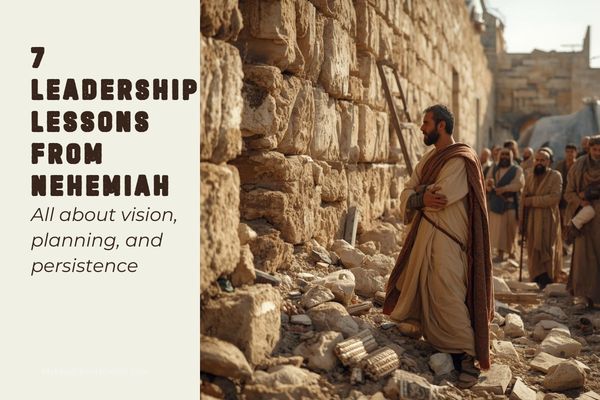
7 Leadership Lessons from Nehemiah’s Mission to Rebuild Jerusalem
Leadership in the Bible often emerges during difficult moments. One of the most inspiring examples comes from the story of Nehemiah. His mission to rebuild the walls of Jerusalem shows how faith, vision, and perseverance can guide a leader through seemingly impossible challenges.
Although this story took place thousands of years ago, the lessons still apply today. Whether you lead a family, a ministry, a workplace team, or simply want to grow spiritually, Nehemiah offers a powerful model of leadership rooted in faith and action.
Let’s take a peek at seven leadership lessons from Nehemiah’s mission to rebuild Jerusalem and see how they can apply to our lives today.
1. Great Leaders Begin with a Vision
Nehemiah first heard about the broken walls of Jerusalem while serving in Persia. Instead of ignoring the problem, he allowed
the news to stir his heart. That concern eventually became a clear vision.
Scripture says:
“Now it came about when I heard these words, I sat down and wept and mourned for days; and I was fasting and praying before the God of heaven.” (Nehemiah 1:4)
A strong vision often begins with compassion. Nehemiah cared deeply about the condition of his people and their city. Likewise,
many modern leaders discover their calling when they see a problem that needs attention.
In our own lives, God may place a concern on our hearts that becomes the starting point for meaningful leadership.
2. Prayer Should Guide Every Decision
Before Nehemiah made any move, he prayed. He asked God for wisdom, courage, and favor. Prayer prepared his heart and shaped
his plan.
Nehemiah prayed:
“O Lord, I beseech You, may Your ear be attentive to the prayer of Your servant… and make Your servant successful today.” (Nehemiah 1:11)
Modern leadership often emphasizes strategy and planning. While those things matter, the Bible reminds us that spiritual
guidance should come first. Prayer helps leaders stay focused on God’s purpose rather than their own ambitions.
3. Wise Leaders Make a Clear Plan
When Nehemiah arrived in Jerusalem, he did not rush into action. Instead, he quietly inspected the damage and studied the
situation.
“Then I arose in the night… and I inspected the walls of Jerusalem which were broken down.” (Nehemiah 2:12–13)
After gathering information, he organized the people and assigned sections of the wall for different groups to rebuild.
This careful planning shows that faith and preparation work together. Today, leaders also benefit from gathering information,
evaluating challenges, and creating thoughtful plans before taking action.
4. Leaders Inspire Others to Join the Mission
Nehemiah did not rebuild the wall alone. Instead, he motivated others to join the effort.
“I told them how the hand of my God had been favorable to me… Then they said, ‘Let us arise and build.’” (Nehemiah 2:18)
Great leaders help people see the bigger picture. They share the vision and invite others to participate.
In churches, families, and workplaces today, leadership often means encouraging others and helping them believe that their
efforts matter.
5. Persistence Is Essential When Opposition Appears
Soon after the rebuilding began, opposition appeared. Critics mocked the project and tried to discourage the workers.
However, Nehemiah refused to give up.
“Hear, O our God, how we are despised! Return their reproach on their own heads.” (Nehemiah 4:4)
Despite threats and criticism, the people continued building.
This lesson applies strongly today. Leaders often face discouragement, criticism, or unexpected obstacles. Persistence and
faith help keep the mission moving forward.
6. Leaders Balance Work and Protection
Nehemiah also showed wisdom when danger increased. He organized guards while the people continued building.
“Those who were rebuilding the wall… each one with one of his hands doing the work and the other holding a weapon.” (Nehemiah 4:17)
This moment shows practical leadership. Nehemiah adjusted the strategy to protect the workers while continuing the project.
Similarly, modern leaders must remain flexible. When circumstances change, wise leaders adapt while still pursuing the goal.
Characteristics of Nehemiah
Defined qualities made Nehemiah an effective leader. These characteristics still serve as helpful reminders for believers today.
- Deep compassion for others
- A strong prayer life
- Strategic thinking and planning
- Ability to inspire teamwork
- Courage during opposition
- Commitment to God’s purpose
When we reflect on these traits, we begin to see why Nehemiah succeeded. His leadership came from a combination of faith,
discipline, and determination.
If you enjoy studying biblical leadership examples, you might also appreciate our article on
leadership lessons from Moses.
Many leaders throughout Scripture reveal valuable lessons for modern life.
7. Faithful Leadership Produces Lasting Results
Because of Nehemiah’s leadership, the wall of Jerusalem was rebuilt in only fifty-two days.
“So the wall was completed on the twenty-fifth of the month Elul, in fifty-two days.” (Nehemiah 6:15)
This achievement amazed surrounding nations and demonstrated God’s power at work through faithful leadership.
The story reminds us that God often works through ordinary people who trust Him and stay committed to the task.
Applying Nehemiah’s Leadership Lessons Today
Nehemiah’s story continues to inspire believers today. His example teaches us to care deeply about God’s work, seek guidance
through prayer, and pursue our goals with persistence.
Even small acts of leadership can make a difference. Encouraging someone, helping a church project, mentoring a young believer,
or serving others faithfully all reflect the same principles Nehemiah demonstrated.
As you continue your walk through the Bible, you may find many other examples of leadership that still apply today. You can find
more biblical teaching and encouragement on the Making Christ Known website.
Final Thoughts
The mission to rebuild Jerusalem’s walls was about more than construction. It revealed how faith, vision, planning, and
persistence work together in leadership.
When believers apply these principles today, they can positively influence families, churches, communities, and workplaces.
If you would like to find more practical leadership principles, you may enjoy my book
How To Be A Good Leader.
It expands on many leadership ideas and shows how they can be applied in everyday life.
In Christ,
Bob
*Verses from New American Standard Bible (NASB).
Discover more from Making Christ Known
Subscribe to get the latest posts sent to your email.