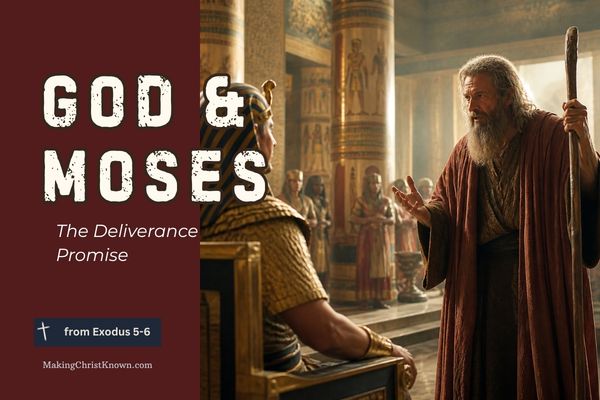
God and Moses: The Deliverance Promise in Exodus 5 and 6
Have you ever prayed for God to change a difficult situation, only to watch things get worse? Moses knew that feeling. He obeyed God and confronted Pharaoh, expecting progress. Instead, Pharaoh made life even harder for the Israelites. Yet God had not forgotten His people. The story of God and Moses in Exodus 5 and 6 reminds us that God’s promises remain firm, even when our circumstances seem hopeless.
In this Bible study from Exodus, we’re looking at God’s promise of deliverance, the covenant He made with Israel, and the importance of trusting His timing. Also, we’ll learn how this passage can encourage us when our own prayers seem unanswered.
When Obedience Seems to Make Life Harder
God had promised to deliver Israel from slavery in Egypt. However, Pharaoh refused to listen to Moses. Instead of releasing the Israelites, he increased their workload. He demanded that they gather their own straw while still producing the same number of bricks.
As a result, the Israelites became exhausted and discouraged. They even blamed Moses for making their suffering worse. You can learn more about what happened in Bricks Without Straw.
Moses was discouraged, too. Even though he followed God’s instructions, nothing seemed to improve. So, he brought his questions directly to the Lord.
Sound familiar?
Many of us have faced similar moments. We pray, wait for an answer, and wonder why nothing changes. However, the story of God and Moses teaches us an important lesson: we may not understand what God is doing, even when He is working out His plan.
Moses Questions God’s Timing
After Pharaoh increased the Israelites’ workload, Moses returned to God with some difficult questions. He wanted to know why obeying the Lord had brought more suffering instead of freedom.
“O Lord, why have You brought harm to this people? Why did You ever send me?” (Exodus 5:22)
“Ever since I came to Pharaoh to speak in Your name, he has done harm to this people, and You have not delivered Your people at all.” (Exodus 5:23)
Moses could see the hardship, but he couldn’t see the outcome. From his perspective, his mission had failed. He did what God asked, yet the people were suffering more than before.
Nevertheless, God had not abandoned Israel. He was preparing to demonstrate His power and fulfill His promises. Moses simply did not know how the story would unfold.
We face similar circumstances today. When God doesn’t seem to answer our prayers, we may wonder if we misunderstood God’s direction. But, this does not automatically mean that God has left us or that our faith has failed.
As Christians, we find encouragement in the authority of Jesus Christ. Read our related study, The Authority of Jesus, to learn more about Christ’s authority and why we can trust Him.
God Remembers His Covenant with Israel
God answered Moses by reminding him of His identity, His covenant, and His commitment to rescue the Israelites. Rather than focusing on Pharaoh’s resistance, the Lord directed Moses toward what He was about to do.
“Then the Lord said to Moses, ‘Now you shall see what I will do to Pharaoh; for under compulsion he will let them go, and under compulsion he will drive them out of his land.’” (Exodus 6:1)
God was preparing to act. Pharaoh’s stubbornness would not cancel the Lord’s promise.
Next, God reminded Moses of His relationship with Abraham, Isaac, and Jacob. He had established a covenant with their ancestors and promised them the land of Canaan.
Now, the time had come to act on behalf of their descendants. God had heard the cries of His people, and He had not forgotten His covenant. His faithfulness did not depend on Pharaoh’s cooperation.
What Did God Promise Moses in His Covenant?
In Exodus 6, God gave Moses a clear message to share with the Israelites. His words revealed the coming deliverance and the special relationship He intended to establish with His people.
“I am the Lord, and I will bring you out from under the burdens of the Egyptians, and I will deliver you from their bondage.” (Exodus 6:6)
This Deliverance Promise included much more than an end to forced labor. God would rescue His people, redeem them, and lead them toward the land He had promised their ancestors.
He also promised to establish a lasting relationship with Israel.
“Then I will take you for My people, and I will be your God; and you shall know that I am the Lord your God, who brought you out from under the burdens of the Egyptians.” (Exodus 6:7)
Notice the repeated words, “I will.” God Himself would take the initiative to fulfill His promise. Israel’s hope rested in the Lord, not in the people’s ability to overcome Pharaoh through their own strength.
Of course, this passage doesn’t mean that God promises to remove every difficulty from our lives immediately. Instead, it reminds us that He is faithful to His Word. Human opposition can’t defeat His purposes.
Moses and Patience: Why Won’t God Hurry?
The Israelites were not freed when Moses first approached Pharaoh. In fact, their work became harder. Moses had expected God’s command to lead to progress, but he saw only more suffering.
In the meantime, Pharaoh continued to resist the Lord’s authority. But God was preparing to demonstrate His power in ways Moses had not yet witnessed. He will show that the Lord is greater than Pharaoh and the gods of Egypt.
If you are following the story of Moses, read Moses Returns to Egypt giving the events leading up to this moment.
Patience and Faith Go Together
Are we sometimes like Moses? Do we expect God to answer every prayer today, or even right now?
I know I have done this plenty of times. I prayed and expected immediate results. When nothing changed, I wondered what was happening.
Waiting can be hard, especially when we need help right away. We want to understand our struggles, and we want to know when they will end. However, faith calls us to trust God even when we can’t see the outcome.
Patience does not mean ignoring our problems or pretending that life is easy. Rather, it means continuing to seek God while we wait for His direction. We can bring our honest questions to Him, just as Moses did.
Understanding God’s Plan for Israel
God knew that Pharaoh would not willingly release an entire workforce simply because Moses demanded it. Egypt depended on the Israelites’ labor, and Pharaoh had no desire to give up that source of power.
Therefore, the Lord would demonstrate His authority through a series of mighty acts. These events would lead to Israel’s release and show that the God of Abraham, Isaac, and Jacob was greater than Pharaoh.
Moses could not see these events in advance. He saw the immediate hardship, while God knew what lay ahead.
We face a similar limitation. We can’t know every detail of tomorrow. So, don’t assume that every hardship has an obvious explanation. Still, we can turn to God for wisdom, strength, and guidance as we move forward.
What the Story of God and Moses Teaches Us About God’s Heart
We can’t fully understand the mind of God or know every reason He allows a certain situation to continue. However, Scripture reveals His character and His faithfulness.
As we study Exodus 5 and 6, several important lessons stand out:
- God teaches us patience. Moses had to learn that an early setback did not mean the end of God’s plan.
- God reveals His power. Pharaoh’s resistance would not prevent the Lord from demonstrating His authority.
- God hears the cries of His people. He acknowledged the Israelites’ suffering and remembered His covenant with them.
- God calls us to trust Him. We may not understand His timing, but we can seek His wisdom and follow His Word.
These lessons do not mean that we will always understand why something happens. Instead, they remind us that our limited perspective doesn’t define God’s faithfulness.
What Should We Do When God Seems Slow to Answer?
When life becomes difficult, we get discouraged, just as Moses did. However, we can choose how we respond while we wait. Here are four ways to strengthen your faith during uncertain times.
1. Don’t Focus Only on the Hardship
Our problems deserve attention, but they shouldn’t consume every thought. Make time to pray, read Scripture, and remember God’s past faithfulness. These habits can help you face today’s challenges with a clearer perspective.
2. Continue to Honor God
We can honor God even when we don’t understand our circumstances. Choose honesty, kindness, and obedience. Keep doing what is right, even when the results are not what you expected.
3. Remember That God Is Near
During difficult times, it is easy to feel alone. Moses experienced frustration, and the Israelites felt the weight of their bondage. Yet God had not forgotten them.
When you feel discouraged, turn to Him in prayer and ask for strength. Also, seek encouragement from other believers instead of carrying every burden alone.
4. Trust God Without Knowing Every Detail
We can’t see the entire picture as God does. Therefore, we shouldn’t assume we know exactly why an event has happened.
Instead, ask God for wisdom and take the next faithful step. You don’t need to know every answer before moving forward. God knows–trust Him.
We Can See the Outcome for Israel
When we read Exodus, we know that God eventually led the Israelites out of Egypt. However, they didn’t have that perspective while they were still suffering under Pharaoh.
That difference matters. We can look back at their story and see how God fulfilled His promise. Yet when we face our own trials, we may not know how our circumstances will turn out.
The lesson is not that every problem will end on our preferred schedule. Rather, we can hold on to God’s promises, seek His guidance, and remain faithful through times of uncertainty.
Sometimes, the best thing we can do is take the next step, pray for strength, and refuse to let discouragement have the final word.
As the familiar gospel song by The Crabb Family reminds us:
“Hold on, our God will show up; and take us through the fire again.”
I hope these words encourage you when life becomes difficult. Like Moses, we struggle to understand God’s timing. Nevertheless, we can keep turning to Him for wisdom, patience, and hope.
Amen.
Love in Christ,
Bob
Continue Your Bible Study
Thank you for studying God’s Word with me. For more Bible lessons, Scripture explanations, and encouragement for your daily walk with Christ, visit Making Christ Known.
Also, take a moment to read John 3:16 and reflect on God’s love and the life-changing gift of Jesus Christ.
*Verses from New American Standard Bible (NASB).
Discover more from Making Christ Known
Subscribe to get the latest posts sent to your email.