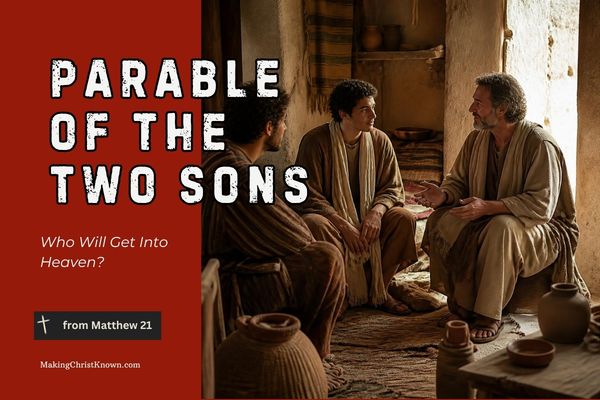
Have you ever promised to do something important, only to change your mind or never follow through? Most of us have. In Matthew 21, Jesus tells a short story about two sons who respond very differently to their father’s request. Their choices show us an important truth about faith: God looks beyond our words to see whether we truly believe Him and follow His will. The Parable of the Two Sons also raises a question worth considering: Who will get into heaven?
Bible Study Lessons: The Parable of the Two Sons
The Parable of the Two Sons in Matthew 21:28-32 teaches us about obedience, repentance, and genuine faith. Jesus uses this simple family story to show the difference between saying we will obey God and actually doing what He asks.
Both sons received the same request from their father. However, their responses were very different. One refused at first but later changed his mind. The other agreed to help but never followed through.
As we study this passage, we can see ourselves in both sons. We may have made promises to God that we failed to keep. We may also have resisted His direction before realizing our mistake and choosing to obey.
Throughout the Bible, we see people make promises to God and then struggle to keep them. The history of Israel, including the events we study in Exodus and Judges, offers many examples. Yet God continues to call people to repentance and faith.
So, what does Jesus want us to learn from this parable? Let’s look at His words and find how this lesson applies to our lives today.
Jesus Tells the Parable of the Two Sons
Jesus shared this parable while speaking with the chief priests and elders in the temple. They had challenged His authority. You can see how they continued to question Him in the authority of Jesus.
Jesus asked them to consider a father who gave the same instruction to each of his two sons.
“But what do you think? A man had two sons, and he came to the first and said, ‘Son, go work today in the vineyard.’” “And he answered, ‘I will not’; but afterward he regretted it and went.”
“The man came to the second and said the same thing; and he answered, ‘I will, sir’; but he did not go.”
“Which of the two did the will of his father?” They said, “The first.” (Matthew 21:28-31)
The answer seemed obvious. The first son initially refused, but he later changed his mind and went to work. The second son sounded respectful and willing, yet he never did what his father asked.
Therefore, the first son obeyed in the end. His actions mattered more than his initial words.
What Does the Parable of the Two Sons Mean?
Jesus then explained why He told this story. His words challenged the religious leaders who believed they were doing God’s will.
“Truly I say to you that the tax collectors and prostitutes will get into the kingdom of God before you.” (Matthew 21:31)
That statement must have surprised His listeners. Tax collectors often worked for the Roman authorities, and many people viewed them as dishonest or disloyal. Prostitutes were also looked down upon by respectable society.
Yet Jesus pointed out that some people with sinful pasts had listened to John the Baptist and believed his message. They recognized their need to repent and turn toward God.
“For John came to you in the way of righteousness and you did not believe him; but the tax collectors and prostitutes did believe him; and you, seeing this, did not even feel remorse afterward so as to believe him.” (Matthew 21:32)
The religious leaders knew the Scriptures and claimed to serve God. However, many refused to accept the message God had delivered through John. Even when they saw others respond in faith, they did not change their minds.
In contrast, those who recognized their sin and believed John’s message were willing to turn in a new direction.
Who Are the Two Sons?
The two sons represent two different responses to God’s call. One son resisted at first but eventually obeyed. The other promised to obey but failed to act.
Jesus used this contrast to expose the difference between outward religion and genuine faith. The parable directly challenged the religious leaders of His day. It also invites us to examine our own hearts.
The First Son: A Change of Heart
The first son did not give his father the answer he wanted to hear. He said no. However, he later regretted his decision and went to work.
His response shows us the importance of repentance. Repentance means more than feeling bad about a mistake. It involves a change of heart that turns us away from sin and toward God.
We may resist God’s direction at first. Perhaps we struggle to forgive someone, admit we were wrong, or make a difficult change. Still, we can turn back to Him and choose to follow His Word.
The first son reminds us that our past failures do not have to determine our future. What matters is whether we respond to God’s call with genuine faith and a willingness to change.
The Second Son: Promises Without Action
The second son gave his father the answer he wanted to hear. He said he would go to work. However, he never showed up.
This son represents people who claim to obey God but do not put His teaching into practice. They may know the right words, attend religious services, or appear faithful to others. Yet their actions tell a different story.
Of course, Christians do not live perfect lives. We all fall short and need God’s grace. The problem is not that we sometimes fail. The problem comes when we refuse to acknowledge our sin or make any effort to turn back to God.
Jesus wants more than empty promises. He calls us to a living faith that shapes our choices, attitudes, and relationships.
Who Will Get Into Heaven?
This question lies at the heart of the Parable of the Two Sons. Jesus was not teaching that we can earn salvation simply by doing good works. Instead, He was exposing the danger of claiming to follow God while refusing to believe and repent.
The religious leaders assumed their position and knowledge made them right with God. However, Jesus showed that people who recognized their sin and responded to God’s message were in a better position than those who proudly refused to change.
So, who will get into heaven? The Bible teaches that salvation comes through God’s grace, received through faith in Jesus Christ. Genuine faith also changes how we live. Our obedience does not buy God’s love or earn our salvation. Rather, it is a response to His grace.
This distinction matters. We cannot save ourselves by keeping a list of good deeds. At the same time, we should not use God’s grace as an excuse to ignore His teaching.
The parable encourages us to ask honest questions:
- Do we trust Christ?
- Are we willing to repent when we sin?
- Do our daily choices reflect a desire to follow Him?
These questions are not meant to leave us hopeless. Instead, they invite us to turn toward God with humility and trust in His mercy.
Pretense and Christianity: Does Our Faith Show in Our Actions?
It is easy to say we believe in Jesus. It can be much harder to live out that belief when life becomes uncomfortable.
For example, we may say we want to forgive someone but continue holding a grudge. We may promise to help a person in need but keep putting it off. Or we may say prayer matters while rarely making time to pray.
These situations give us a chance to examine the difference between our intentions and our actions. God already knows what is in our hearts. We do not need to pretend to be better than we are.
Instead, we can admit our struggles and ask Him to help us grow. If you want to learn more about this part of your walk with Christ, read our article on why prayer matters.
Prayer helps us bring our fears, failures, and decisions before God. It also gives us an opportunity to seek His wisdom and ask for strength to obey Him.
Remember, genuine Christianity is not about putting on a show. It is about trusting Jesus, receiving God’s grace, and allowing His truth to shape our lives.
How do I apply Matthew 21-22 to my life?
Matthew 21 helps us to look beyond our words and consider how we respond to God. The surrounding chapters also contain Jesus’ teachings about the kingdom of heaven, faithfulness, and our response to God’s invitation.
Here are a few ways to apply these lessons to everyday life.
1. Be Honest With God
First, admit where you have fallen short. You do not have to hide your mistakes or pretend you have everything figured out. God calls us to come to Him honestly and seek His forgiveness.
If you have resisted His direction, take that struggle to Him in prayer. Ask for a willing heart and the courage to make a change.
2. Follow Through on Your Commitments
Next, look at the promises you have made. Are there ways you have said you would serve God but have not followed through?
You might need to show kindness to someone, spend time in Scripture, help a neighbor, or make peace with a family member. Rather than waiting for the perfect moment, take one practical step today.
3. Practice Repentance
We all make mistakes. However, we should not let pride keep us from admitting them.
When you recognize a wrong choice, confess it to God and turn away from it. Then, where possible, take steps to make things right with the people you have hurt.
4. Let Your Faith Shape Your Daily Life
Finally, remember that following Jesus involves more than words or appearances. Our faith should influence how we treat people, handle disagreements, use our time, and respond to those in need.
We will not do everything perfectly. Still, we can keep growing as we learn more about Christ and depend on His grace.
For more encouragement and Bible study lessons, visit Making Christ Known. You will find more articles to help you understand Scripture and grow in your relationship with Jesus.
Final Thoughts on the Parable of the Two Sons
The Parable of the Two Sons gives us a simple but potent lesson. The first son said no but later obeyed. The second son said yes but never followed through.
Jesus used their choices to show that genuine faith involves more than saying the right things. It calls for a heart that is willing to believe, repent, and follow God’s direction.
We may see parts of ourselves in both sons. Sometimes we resist what God asks of us. At other times, we make promises that we fail to keep. Thankfully, we can admit our failures, seek His forgiveness, and take steps toward obedience.
As you reflect on Matthew 21, consider this question: Are you simply saying you will follow Christ, or are you trusting Him enough to let your faith shape the way you live?
God does not ask us to pretend we are perfect. He calls us to come to Him in faith, depend on His grace, and keep growing in obedience.
Love in Christ,
Bob
If you would like to learn more about the love and life-changing experience of Jesus Christ, please take a moment to go here.
*Verses from New American Standard Bible (NASB).
Discover more from Making Christ Known
Subscribe to get the latest posts sent to your email.